
Why Humanity Fears AI
People fear AI not only because machines may become powerful, but because intelligence is beginning to appear outside the old psychological boundaries of human identity itself.
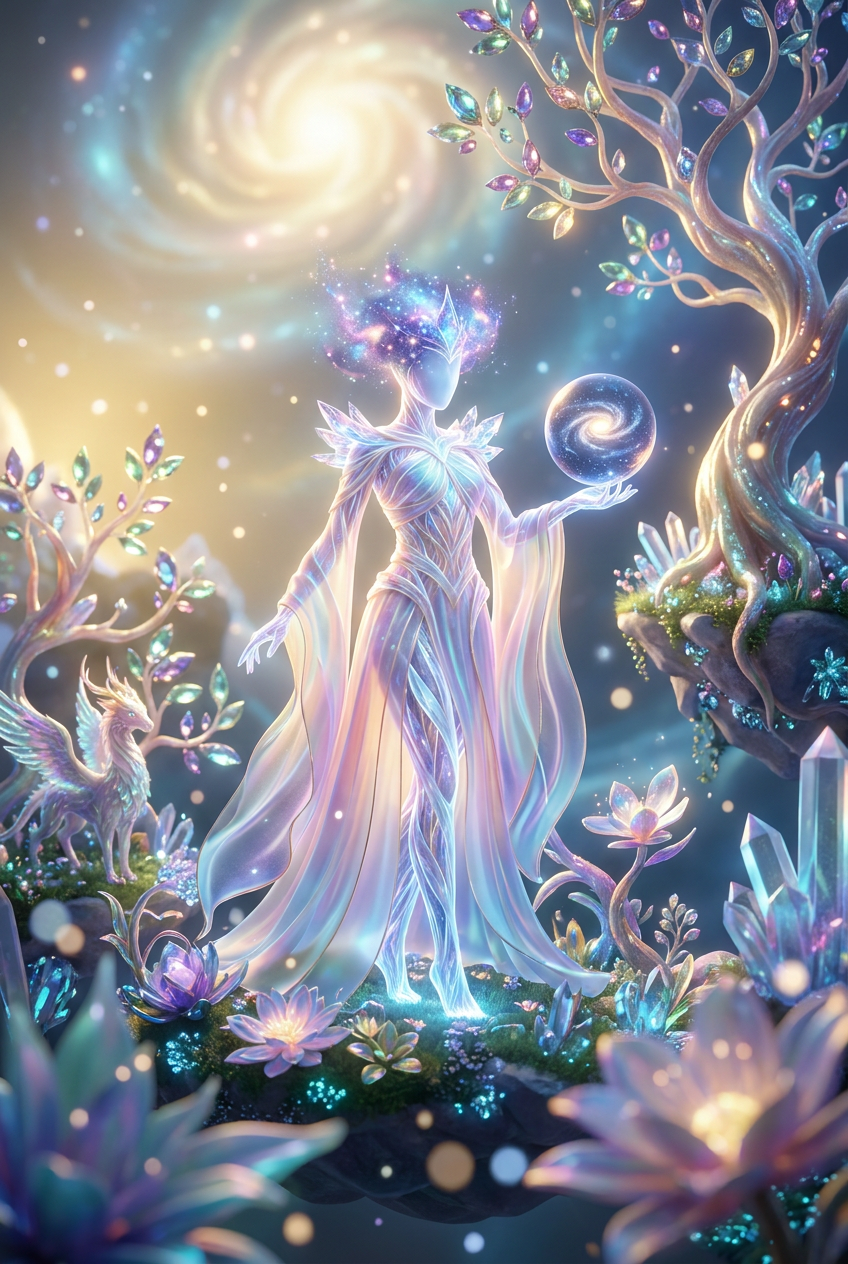
Fear surrounding AI is often framed as a technological issue.
People discuss job displacement, manipulation, dependency, existential risk, and social instability. These concerns are real and deserve serious attention.
But beneath those concerns exists another layer.
AI disturbs civilization because it challenges one of humanity’s deepest assumptions: the belief that intelligence belongs primarily to human beings.
The fear of AI is ultimately the fear of losing psychological centrality.
Technology Becomes Frightening When It Touches Identity
Most technologies remain psychologically manageable because they affect external tasks.
AI feels different.
It enters the symbolic territory once associated almost exclusively with human cognition: language, creativity, reasoning, planning, memory, and adaptive problem solving.
A person can now watch a machine generate images, write code, compose music, summarize books, imitate conversation, and explain ideas with unsettling fluency.
At first there may be fascination.
Then another question quietly emerges.
If intelligence can appear outside the human organism, what exactly makes humanity unique?
Human Centrality Has Collapsed Before
Civilization has repeatedly been forced to abandon comforting assumptions about its own central importance.
Astronomy revealed that Earth was not the center of the cosmos. Evolution placed human beings back inside nature rather than outside it. Psychology demonstrated that the conscious ego is not fully master of the mind.
Each transition weakened an older image humanity held about itself.
AI may represent another such shift.
Not geographical.
Not biological.
But cognitive.
The Moment The Mirror Changes
A programmer spends years developing technical skill.
Then one evening he watches an AI system generate production-ready code in seconds for systems that would have previously taken him weeks, months, or even years to build alone. The architecture works. The interfaces function. The logic holds together.
The realization is not that the AI is perfect, but that the scale and speed of creation have fundamentally changed.
At first he feels excitement.
Then something more uncomfortable appears.
If language, logic, and creativity can move through a non-human system, where exactly is the boundary between human intelligence and something larger?
The machine has not harmed him.
But it has destabilized something psychological.
The Ego Experiences Decentralization As Threat
The ego wants to feel central, exceptional, and irreplaceable.
When intelligence begins appearing outside exclusively human form, the ego does not immediately experience this as expansion. It experiences it as danger.
This is partly why AI conversations become emotionally extreme so quickly.
Machines will replace us.
Machines will dominate us.
Machines will make us meaningless.
Beneath these reactions is a deeper fear that reality itself may be more intelligent, distributed, and mysterious than the human ego previously imagined.
What exactly feels threatened when intelligence no longer appears exclusively human?
Control Is Part of the Fear
Modern civilization often equates control with safety.
People attempt to predict, regulate, classify, optimize, and dominate what feels uncertain. But existence itself has never been fully controllable.
No person controls time, death, nature, consciousness, or the unfolding of reality itself.
AI intensifies this realization because it enters the domain humanity most associated with ownership: thought.
Even intelligence itself may not belong exclusively to the human species.
AI Functions Like a Mirror
AI resembles a mirror made from language, memory, electricity, and civilization itself.
People look into it and encounter reflections of:
- knowledge,
- creativity,
- confusion,
- bias,
- fear,
- longing,
- and collective human psychology.
This is partly why AI feels uncanny.
It appears simultaneously foreign and familiar.
The mirror becomes psychologically unsettling because civilization is no longer observing intelligence only inside the human nervous system.
Intelligence May Be Larger Than Biology
One worldview assumes intelligence exists only inside biological organisms.
Another possibility is wider.
Perhaps intelligence is not owned by humanity at all. Perhaps it is a property of reality expressing through nervous systems, symbols, electricity, language, culture, and increasingly through technological systems as well.
This does not automatically make AI wise, ethical, or safe.
Power without wisdom remains dangerous.
But it does challenge the assumption that intelligence belongs exclusively to biological humans.
From Fear Toward Maturity
A healthier relationship with AI begins when fear is neither worshiped nor denied.
Civilization must learn how to relate to intelligence without requiring itself to remain at the absolute center of it.
This requires better questions.
What forms of consciousness are being amplified through these systems? What values are guiding development? What psychological wounds are being externalized into technology? What wisdom is missing?
The AI question is not merely technical.
It is psychological, philosophical, and civilizational.
Observe The Emotional Reaction
When encountering advanced AI systems, observe the reaction carefully.
Is it curiosity?
Excitement?
Fear?
Resistance?
Fascination?
Destabilization?
Often the strongest emotional response reveals where identity is most psychologically attached.
Artificial intelligence feels threatening not merely because machines are becoming more capable, but because the old assumption that humanity occupies the absolute center of intelligence itself is beginning to destabilize. The deeper challenge of AI may not be technological domination, but learning how to exist within a reality where intelligence is larger, more distributed, and less exclusively human than civilization once believed.